Naomi Davidson, Head of Science and Surveillance and Registered Nutritionist, shares her reflections from the Nutrition Society Irish Section Conference 2026, held at Ulster University’s Coleraine campus, and what the event meant for the Food Standards Agency (FSA) in Northern Ireland.
Back at Ulster University
In June 2026, I attended the Nutrition Society Irish Section Conference: Innovative approaches for optimising nutrition across the lifecycle, held at Ulster University’s Coleraine campus.
This one felt particularly special for me. I studied Human Nutrition at Coleraine, so returning to campus in a professional role with the FSA in Northern Ireland was a real full-circle moment.
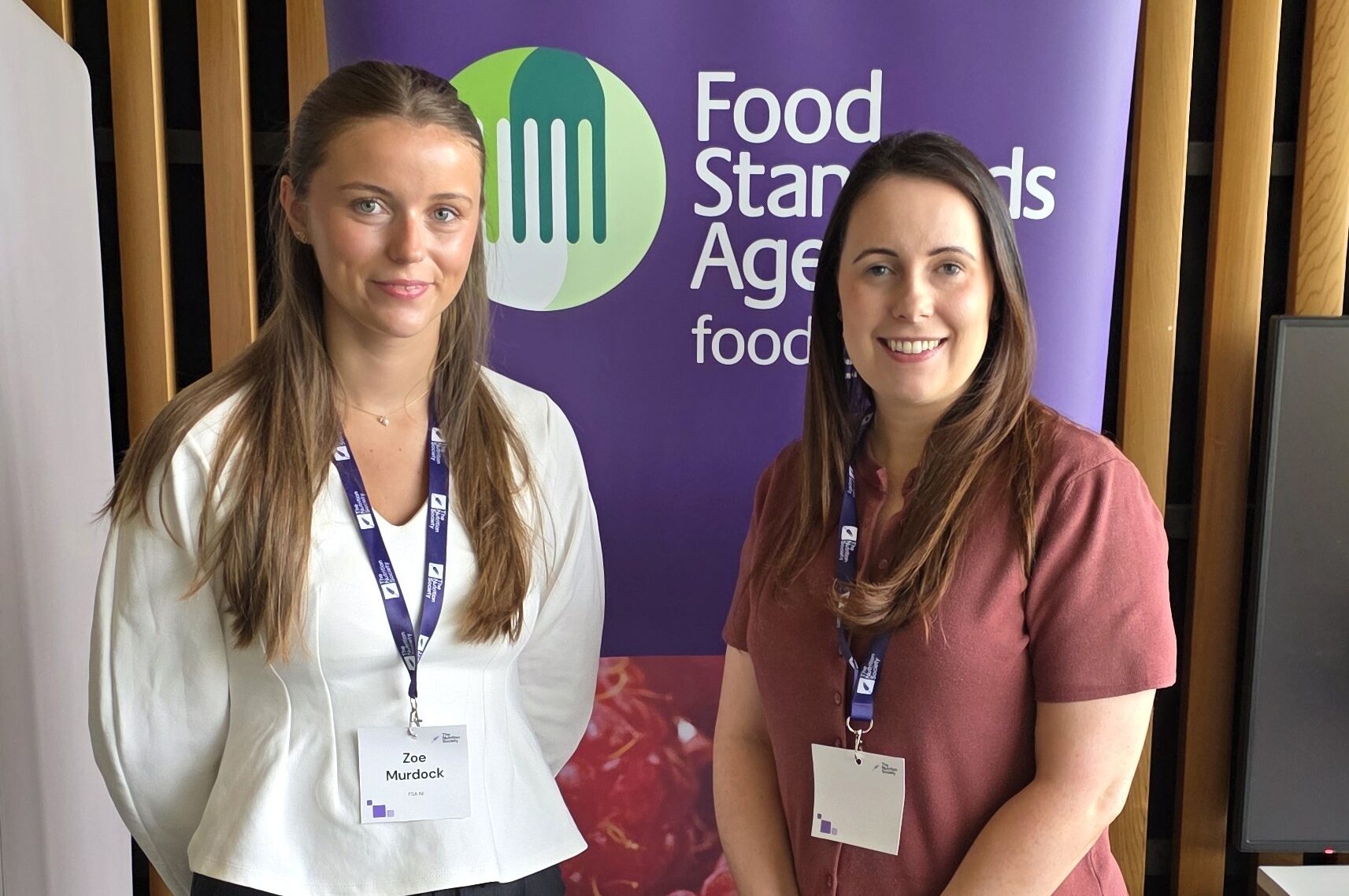
I was joined by Cathy Hopkins and Zoe Murdock from our Science and Surveillance team. It was Zoe’s first week with us as our nutrition placement student, and the conference was a brilliant way to introduce her to the wider nutrition community.
Why conferences like this matter
The Nutrition Society conferences are a valuable opportunity for nutrition professionals to step away from day-to-day work, hear about new research, and think about how evidence can be used in practice and policy.
This year’s event brought together more than 167 delegates from across the island of Ireland and the UK, including researchers, policy makers, students and health professionals. That mix of people made the conversations feel practical, honest and focused on what really matters for public health.
Programme highlights
The programme focused on innovative approaches to optimising nutrition across the lifecycle, with sessions covering three broad themes:
- nutrition across the lifecycle
- translating research into policy and practice
- food systems, sustainability and equity
I was particularly encouraged by the strong focus on sustainability. Sessions explored issues such as school food choices, pathways to more sustainable diets, and how policy, food systems and pupil perspectives can come together to support healthier outcomes.
For me, these discussions clearly linked to the FSA’s third pillar and reinforced how closely nutrition, sustainability and public health are connected.
It was also useful to hear more about how Artificial Intelligence (AI) is being used in nutrition research. There is real potential here to make better use of data and strengthen the link between evidence and policy, while also recognising that we need to keep learning as these tools develop.
The value of conversations
One of the most valuable parts of the conference was simply having time to talk. Events like this create space to share ideas, challenge thinking and hear different perspectives from academic, policy, public health and early career colleagues.
I had a really useful discussion with Dr Aileen McGloin, Director of Nutrition at Safefood, about partnership working, particularly around improving population diet and sharing evidence to support public health action.
I also caught up with Professor Helene McNulty, Director of the Nutrition Innovation Centre for Food and Health (NICHE) at Ulster, to discuss opportunities for further collaboration following our annual FSA–NICHE meeting earlier in the month.
It was great to meet Martina Rooney, Research Programme and Grants Manager for the Co-Centre for Sustainable Food Systems, in person for the first time.
We talked about her work on obesity policy and sustainable food systems, which I’ll be exploring further at a workshop in Dublin later this month.
The team and I also spoke with PhD researchers about their areas of study, which gave us useful insight into emerging research and the questions researchers are exploring.
During one of the lunch breaks, I attended the Irish Section Annual General Meeting, where priorities for the Nutrition Society over the next 12 months were outlined.
Taken together, these conversations helped shape our awareness of what matters most to others working in nutrition, and where there may be opportunities to work together.
For me, that is the real value of bringing people together: it helps move research into action.
Sharing the FSA’s work
Alongside taking part in sessions, we hosted a stand to share information about the FSA’s nutrition remit in Northern Ireland.
Our infographics on the latest National Diet and Nutrition Survey findings, and on research exploring the number of fast food outlets and grocery retailers near secondary schools in Northern Ireland, prompted lots of discussion.
They were a helpful reminder that clear, accessible evidence can open up conversations and support policy and practice.
You can read our nutrition research and reports on our GOV.UK pages to learn more.
Communication came through as a clear theme
A clear message throughout the conference was that research has greater impact when it is communicated well and shared across organisations.
To make a difference, evidence needs to be:
- easy to understand
- relevant to real-world issues
- shared across organisations
There was also a strong sense that we need to keep experimenting with new approaches.
AI is one example, and it was helpful to see how it is already starting to shape nutrition research. As this develops, we need to consider how it can support the work we do, while continuing to use it carefully and thoughtfully.
Nutrition and sustainability are other areas that are developing quickly. Keeping up with emerging research will be important as we continue to build these considerations into our thinking.
Why this matters for public health
Nutrition has a key role in protecting public health, but no single organisation can do this alone. We need to share knowledge, work in partnership and turn research into practical action.
Conferences like this help bring the right people together to make that happen.
What happens next
In the coming weeks, the team and I will follow up with new contacts from the conference to explore opportunities to collaborate and share our work. Our focus remains on turning evidence into action that supports public health.
To find out more about our work:
- read our nutrition research and reports on GOV.UK
- explore our tools and guidance to support healthier choices
- if you would like to collaborate, contact science.ni@food.gov.uk
Leave a comment